Choosing the right floor pad makes a real difference to how a floor looks, how long its finish lasts and how much time staff spend correcting avoidable damage. A pad that is too aggressive can dull or strip a finish that should have lasted longer. A pad that is too gentle can leave soil behind and force extra passes. This guide explains the main pad types, colours, sizes and machine speeds, and how to match them to the job. It will also help you organise pad selection alongside other floor cleaning supplies.
What Are Floor Buffer Pads?
How a Pad Works
Floor buffer pads are round, flat pads fitted to a floor machine or automatic scrubber. They sit between the machine’s pad driver and the floor, providing the contact surface that cleans, polishes, strips or burnishes.
Four Factors That Decide the Pad
For facility managers, the practical starting point is simple. Identify the floor type, the condition of the finish, the machine type and speed, and the result required. The pad choice follows from those four factors.
Understanding the Floor Pad Colour Chart
Colour is the quickest way to identify a pad’s general purpose. While manufacturers can vary slightly, the industry uses a widely recognised floor buffer pads colour system. A floor pad color chart is therefore a useful reference for training staff and standardising supplies across sites.
Stripping Pads: Black and Brown
Black pads are the most aggressive and are used for stripping old finish. They remove wax and sealers efficiently, but they should not be used for routine cleaning. Brown pads are also used for stripping, though generally with slightly less aggression than black, depending on the manufacturer.
Scrubbing Pads: Green and Blue
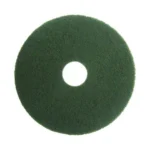
Green and blue pads are used for heavy-duty scrubbing and deep cleaning. They can remove embedded soil and scuffs without stripping the finish when used correctly.
Light Cleaning and Polishing: Red, White and Tan
Red pads are designed for spray buffing and light cleaning. They are a common choice for regular maintenance because they clean without removing much finish.
White and tan pads are the least aggressive. White pads are used for polishing and light cleaning on floors with a good finish. Tan pads are often used for light burnishing and polishing, especially on high-speed machines.
Matching Pad Aggression to the Job
Pad aggression should match the soil level and the condition of the floor finish, not the urgency of the job. Using a stripping pad to remove a small scuff wastes finish and creates extra work. Using a polishing pad on heavily soiled tile may clean the surface but leave traffic lanes and embedded dirt behind.
Daily and Weekly Cleaning
Daily Cleaning
Daily cleaning usually calls for a red or white pad, depending on the finish and machine speed. These pads remove light soil, maintain gloss and are less likely to damage a floor that is in good condition.
Periodic Deep Cleaning
Weekly or periodic deep cleaning may require a green or blue pad. These pads are suitable when the floor has visible soil build-up, scuffs or traffic patterns that a light pad cannot remove.
Stripping: A Separate Task
Stripping is a separate task. It involves removing old finish so a new coat can be applied. This is where stripping floor pads in black or brown are used, together with a suitable floor stripper. The machine moves slowly, the floor is kept wet with stripping solution, and the pad is replaced when it becomes loaded with finish.
The key is to choose the least aggressive pad that will achieve the required result. That approach protects the finish, reduces chemical use and lowers the risk of floor damage.
Pad Sizes and Machine Speeds
Common Pad Sizes
Pad size and machine speed are closely linked. Most floor machines are built for a specific pad diameter. Common sizes include 13, 17, 18 and 20 inches, although other sizes are available for compact machines and large scrubbers.
A 17-inch pad is a common choice for offices, schools and retail spaces. It provides a good balance between coverage and manoeuvrability. A 20-inch pad covers more floor per pass and is useful in larger areas such as warehouses, gymnasiums and shopping centres.
Machine Speeds and RPM
Machine speed is usually expressed in revolutions per minute, or RPM. Standard-speed machines operate at around 175 RPM and are suitable for scrubbing, stripping and spray buffing. High-speed machines operate at around 300 RPM and are used for spray buffing and light polishing. Ultra-high-speed or burnishing machines can operate at 1,000 RPM or more and are designed for restoring gloss on hard floors.
Choosing Pads for Different Floor Types
Vinyl Floors: VCT, Sheet Vinyl and LVT
VCT Floors
Different floors respond differently to pad aggression, moisture and machine speed. Vinyl composition tile, commonly called VCT, is one of the most common commercial floors in Canada. It is usually finished with wax or a floor finish, which means pads must be selected carefully to avoid premature wear. A red pad is often suitable for daily cleaning, while a green or blue pad can be used for deeper cleaning before recoating.
Sheet Vinyl and LVT
Sheet vinyl and luxury vinyl tile, or LVT, are also common in offices and healthcare settings. These floors may have a factory-applied wear layer rather than a traditional wax finish. Aggressive pads can damage that wear layer, so a white or red pad is often a safer starting point. Always follow the flooring manufacturer’s cleaning recommendations.
Labelling Pads by Floor and Task
For facilities with several floor types, it helps to label pads by floor and task, rather than relying on staff memory. A simple system — colour, size and machine — can prevent a stripping pad from being used on a polished floor by mistake.
How to Tell When a Pad Needs Replacing
A worn pad does not clean as effectively and can create uneven results. It may also leave residue or fail to maintain contact with the floor. Replacing pads at the right time is therefore part of good floor care, not an unnecessary expense.
Visible Signs of Wear
One clear sign is visible wear. If the pad has become thin, uneven or compressed, it is no longer providing consistent contact. Some pads develop a smooth, glazed surface when they are loaded with finish or soil. That surface reduces friction and cleaning performance.
Reduced Cleaning Results
Another sign is reduced results. If staff need extra passes to achieve the same finish, or if scuffs remain after normal cleaning, the pad may be worn. The pad may also need replacing if it tears, sheds fibres or separates from its backing.
Tracking Pad Life
For facility managers ordering floor pads canada supplies, it is worth tracking pad use by machine and task. A simple log can show how long pads last in different areas and help set realistic replacement intervals.
Common Mistakes to Avoid
Using One Pad for Every Task
One common mistake is using the same pad for every task. A facility may stock only one colour for convenience, but that approach often leads to overuse of an aggressive pad or underperformance of a light pad. Stocking three or four pad types — light cleaning, deep scrubbing, stripping and polishing — covers most situations without overcomplicating inventory.
Wrong Pad Size for the Machine
Another mistake is using a pad that is too large or too small for the machine. An oversized pad can catch on door frames or baseboards, while an undersized pad leaves the driver exposed and can damage the floor. Always confirm the pad diameter matches the machine.
Building a Practical Pad System for Your Facility
A practical pad system does not need to be complicated. It needs to match your floors, machines and cleaning schedule. Start by listing each floor type and the machines used on it. Then identify the pads required for daily cleaning, periodic deep cleaning, stripping and burnishing.
A Starter Set for Most Offices
For most offices, a red pad for daily cleaning, a green or blue pad for periodic scrubbing, and a black pad for stripping will cover the main tasks. A white or tan pad can be added for polishing and burnishing where high-speed machines are used.
Storage and Staff Training
Keep pads organised by colour and size. Label storage shelves clearly and store pads flat. Provide staff with a simple guide that links each colour to a task and machine speed. This reduces guesswork and helps new staff learn the system quickly.
Pair pad selection with the right cleaning method. Daily dust mopping removes loose soil before buffing, which reduces pad wear. Damp mopping with microfibre mops can also reduce the amount of soil that reaches the floor machine, improving results and extending pad life.
Final Thoughts
Floor buffer pads are a small part of a cleaning programme, but they have a large effect on floor appearance and finish life. The right pad protects the floor, improves cleaning efficiency and reduces the need for corrective work. The wrong pad can dull a finish, create extra labour and shorten the time between strip-and-wax cycles.
A Structured Approach to Floor Care
For facility managers who want a structured approach to floor maintenance, a commercial floor cleaning guide can help connect pad selection with cleaning schedules, chemical use and equipment maintenance. Combined with the right pads, it provides a practical foundation for keeping commercial floors clean, safe and presentable.
Frequently Asked Questions
How do I know which colour floor buffer pad to use?
Match the colour to the task, not to the floor alone. Red and white pads suit daily cleaning, green and blue pads suit periodic deep scrubbing, and black or brown pads are for stripping old finish. Always choose the least aggressive pad that achieves the required result, because that protects the finish and reduces chemical use.
Can I use the same pad on VCT and LVT floors?
Not always. VCT usually has a wax finish, so a red pad for daily cleaning and a green or blue pad before recoating are common choices. LVT often has a factory-applied wear layer that aggressive pads can damage, so a white or red pad is a safer starting point, and you should always follow the flooring manufacturer’s cleaning recommendations.
How often should floor buffer pads be replaced?
Replace a pad when it becomes thin, uneven or compressed, develops a smooth glazed surface, tears, sheds fibres, or separates from its backing. Another sign is reduced results, such as needing extra passes to achieve the same finish. Tracking pad use by machine and task helps set realistic replacement intervals for each area.
What pad size fits my floor machine?
The pad diameter must match the machine. A 17-inch pad is a common choice for offices, schools and retail spaces because it balances coverage and manoeuvrability. A 20-inch pad covers more floor per pass and suits larger areas such as warehouses, gymnasiums and shopping centres. An oversized pad can catch on door frames, while an undersized pad leaves the driver exposed and can damage the floor.
What machine speed should I use with each pad?
Standard-speed machines run at around 175 RPM and suit scrubbing, stripping and spray buffing. High-speed machines run at around 300 RPM and are used for spray buffing and light polishing. Ultra-high-speed or burnishing machines run at 1,000 RPM or more and restore gloss on hard floors, usually with white or tan pads.